
Discover the Legacy of CGSL
Explore the Cabbagetown Group Softball League’s commitment to inclusivity and community, detailing the milestones that shaped its enduring spirit and purpose.
Note: The description for 1975-1979 is based on the personal recollections of Barry Borsellino (click here) and Jack Brannigan (click here).
1975
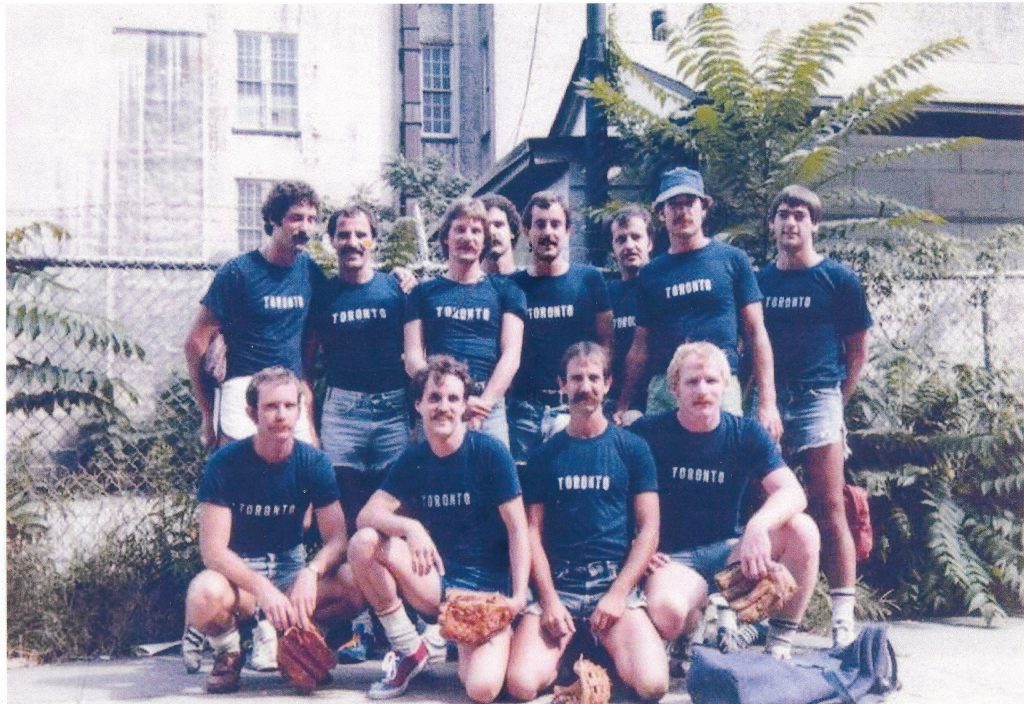
In spring 1975 a network of gay friends began playing pickup softball in Toronto each Sunday. The founders of what would become the CGSL included Barry Borsellino, Warren Shepell, Jack Brannigan, Peter Brown, Michael Brady, Alan Miller (& Chuck), David Dansereau, Doug Taylor, David McKay, Ted Simpson, and a few others.
Most of the time they had enough players to field two teams, but other times they played scrub softball. Scrub is a method of playing softball when there are not enough players to field two full teams. Instead, players rotate through each fielding position, concluding their rotation with a turn at bat.
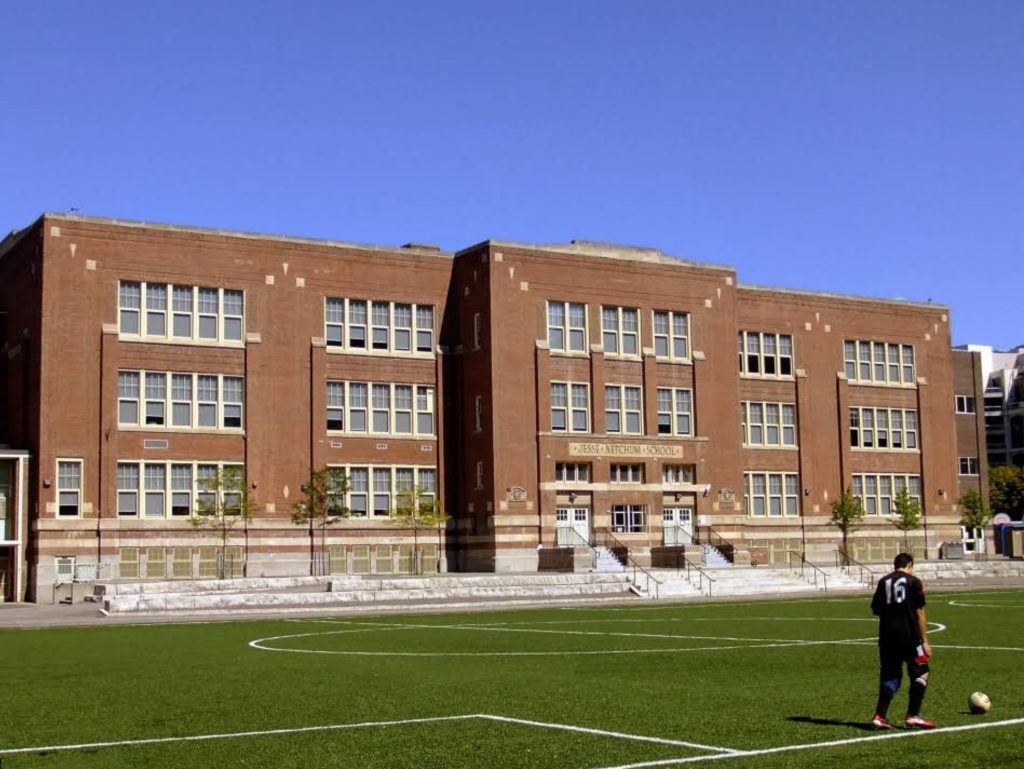
The first games were held at Jesse Ketchum Public School. It initially worked, a group of kids agreed to join allowing enough players for a full game. This only lasted a few weeks as there were some limitations of playing at the school. At the time, the school yard was covered mostly in asphalt and there was no fence, the ball often bounced into the street. Searching for a more suitable home, they tried various locations including Central Tech, June Rowlands Park, Riverdale Park, and the lot behind the Dominion market at Spadina and Bloor. The final games were played at Moss Park.
1976
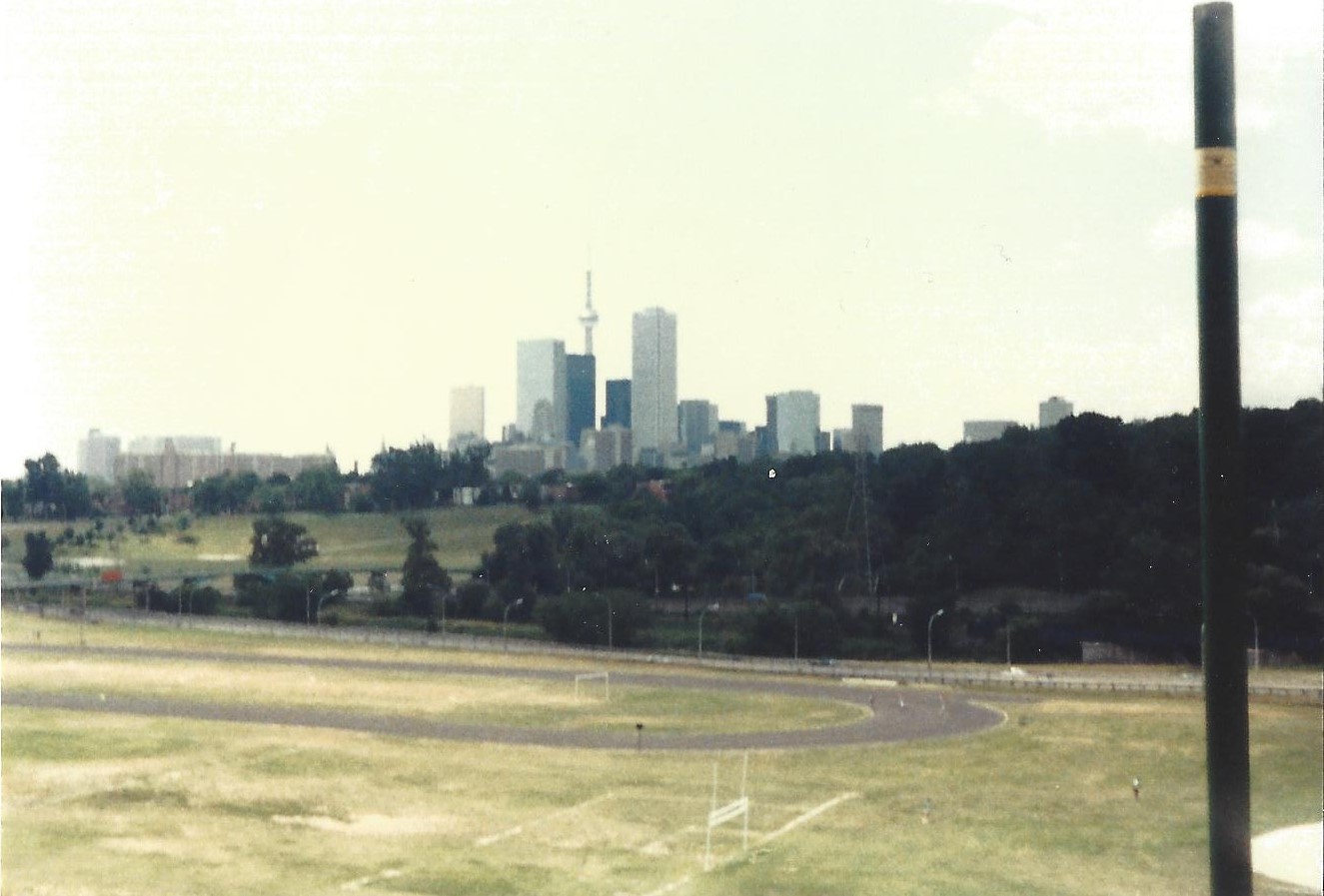
In 1976 the group’s numbers continued to grow and they finally found a field to call home. In January, Barry Borsellino moved to a house on Dearbourne Avenue near Broadview. This was a short walk to the baseball field at Riverdale Park East. It was a modest baseball venue with a dirt infield, a backstop, and a single bench for each side. There were no fences. The park was located within walking distance to Cabbagetown and Riverdale, 2SLGBTQ people increasingly moved into these neighbourhoods in the 1960s and 1970s. It was easy to attract new players by using personal networks and word of mouth.
No one held the permit, Barry and the others would arrive early each Sunday to claim the field. After a full day of playing ball, many of the players walked along the trail across the Don River toward Parliament Street to gather at a bar for drinks. That autumn, Barry, Warren Shepell, and Jack Brannigan followed the same route to mark the end of the season. As they approached the bridge, the three friends discussed the idea of organizing this growing group of softball players into a league. They agreed Barry was in the best position to lead as commissioner and they immediately began the work of recruiting new players for the next season.
1977
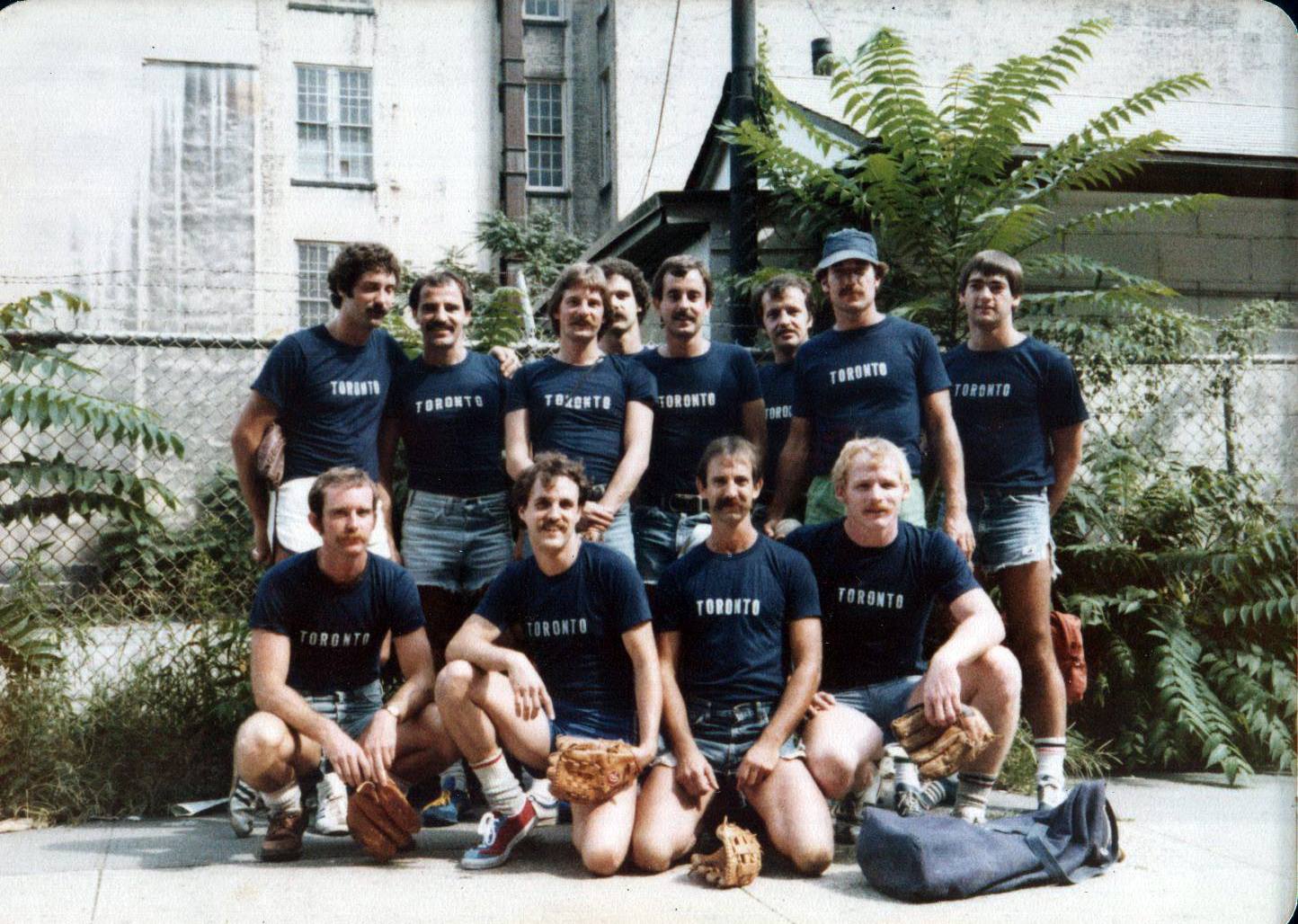
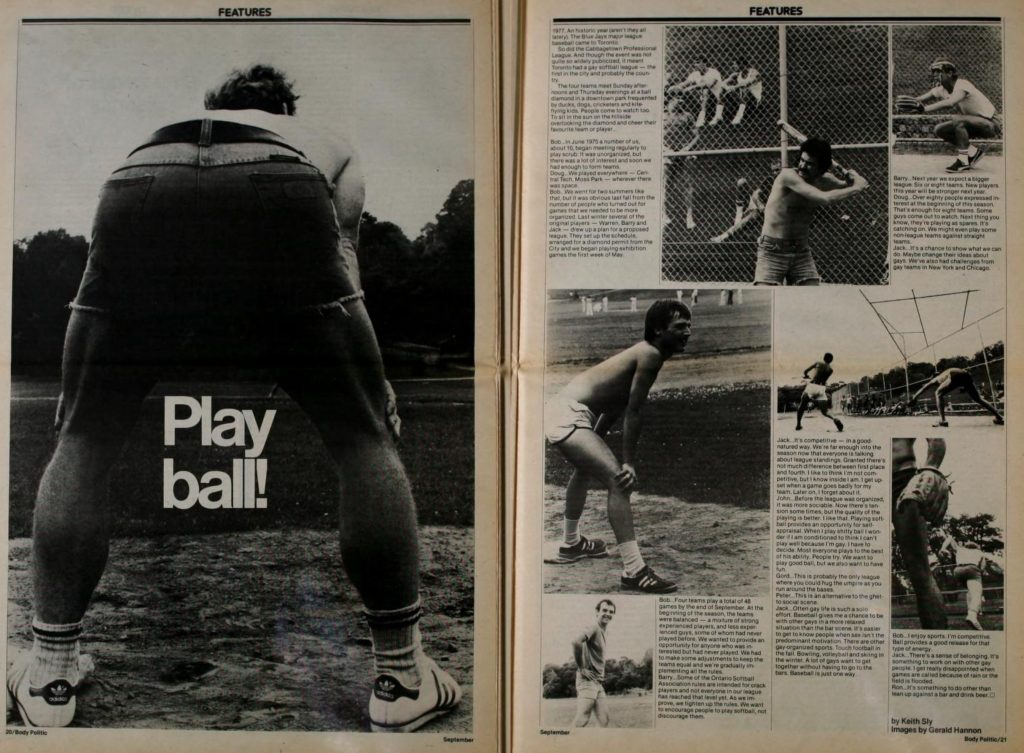
By March 1977, Barry, Warren, and Jack had compiled a list of over 80 potential players, around 60 followed through with signing up. They divided the players into four teams with basic names: A, B, C, and D. They decided to return to Riverdale Park, but this time on the improved west side diamond. Warren volunteered to obtain the permits, but first they needed to pick a name for the league. They were concerned if it was obvious it was a gay league the permit might be declined. This was a legitimate fear, at the time there were no human rights protections in place on the basis of sexual orientation. Discrimination was widespread. They chose the name Cabbagetown Professional Group Softball League (CPGSL). The “G” for group was meant to have the double meaning of “gay”, and the addition of “professional” was meant to create an aura of respectability. Hoping to impress the city officials, Warren sent the permit application by taxi. It worked.
With the teams set and the field secured, the CPGSL was ready for its 1977 season. They played on Sunday afternoons and Thursday evenings. Beginning the first week of May, the four teams were scheduled to play a total of 48 games through to the end of September. In August, CPGSL member Michael Brady arranged for a team to travel to New York City to play an exhibition game against a team in their gay league, the Metropolitan Community Athletic Association. The game was played on a small diamond on Hudson Street, it ended up being a close game but New York won.
The CPGSL playoffs were held at the end of September, but they had to cancel after the fields were flooded by rain. Although overall the first organized season was a success, there were signs of conflict. To ensure competitiveness among the four teams, Barry made the contentious decision to move talented players from winning teams to a team that was struggling. On the one hand, the losing team was on the verge of folding and if Barry did nothing this would threaten the whole season. On the other hand, the teams who lost talented players argued the decision making process was arbitrary. To address this divide, they decided to formalize an election process to select the 1978 commissioner, and team managers would be included with the Commissioner to form an executive committee. Jack Brannigan was elected commissioner for the 1978 season.
1978
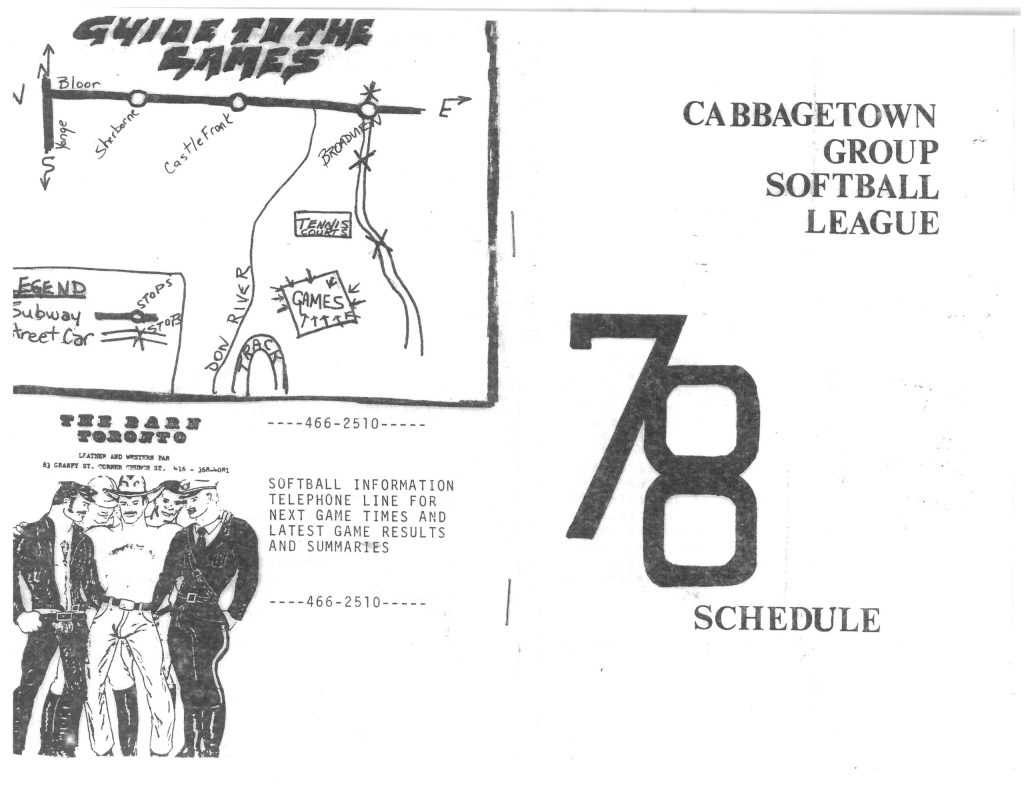
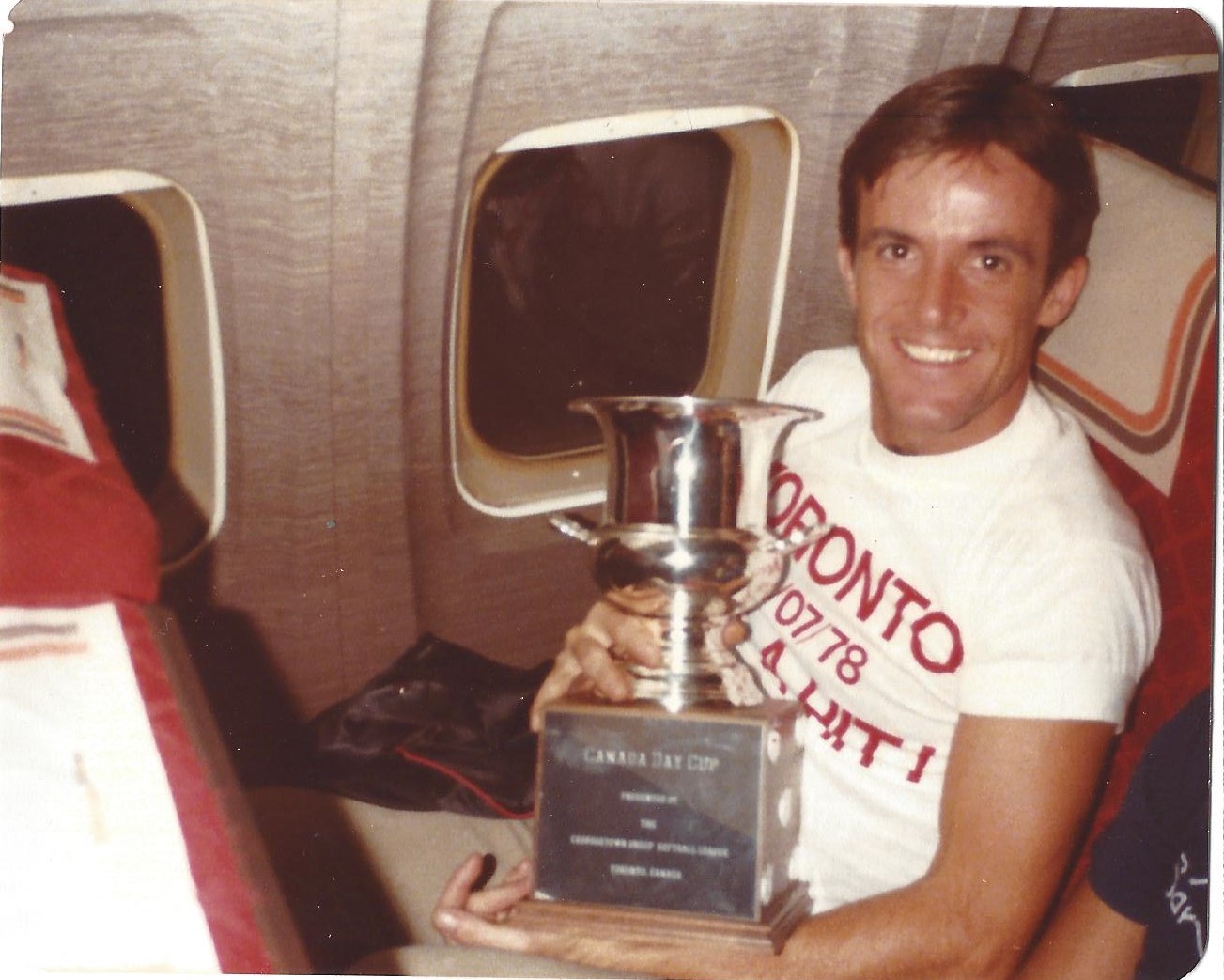
Jack Brannigan met with 8 team captains in February 1978. They created 5 committees, each with a committee chair. The committee chairs would also be part of the executive. Among the committees was a social committee, demonstrating the league’s commitment to creating community both on and off the field. They also created an officiating committee, each team was responsible for providing two volunteers each week to be umpires. The 1977 flooding meant the west field was not an option, so they decided to return to the field on the north east side of the park. They also created a fundraising committee that arranged for the purchase of league equipment, including $47.60 for 12 softballs, $5.50 each for 2 masks, and $16.10 for a set of 3 bases. Games were played each Saturday and Sunday at noon, except on long weekends.
At an executive meeting in early May, they decided to change the name of the CPGSL. They were concerned about coming across as class elitist or unwelcoming to amateur players so they dropped the word “Professional”, the league was then known as the Cabbagetown Group Softball League (CGSL). They also decided that teams should wear like colour uniforms and each team would have a unique name. This was contentious. Some wanted to name their teams after the bars they were socializing at, others were concerned this would allow undue influence of sponsorship. This divide prompted the creation of a committee that would draft a league constitution, formalizing the league’s purpose and establishing a democratic process for resolving conflicts.
The executive intended to continue the interleague play that started in New York in 1977. They received an offer from Milwaukee, the newly formed Saturday Softball Beer League (SSBL) was organizing a tournament called the Wreck Room Classic at the end of May. Organizers Tom Theis and Wayne Bernhagen sent the CGSL an invitation with an offer to billet a team. The Toronto players had such a great time that on the return flight home they made two major decisions. First, they decided to adopt rule changes that conform with the other leagues, in particular changing to slow-pitch softball with a 4th outfielder. And second, they decided to host a tournament of their own on the Canada Day long weekend. This was a bold idea. With only 5 weeks to pull it together, the CGSL organized the first Canada Cup . It was a major success. To show gratitude, the Nickel-Bison team from New York offered to host a Toronto team to attend the 2nd Gay Softball World Series. The CGSL agreed to join with teams from New York, Milwaukee, San Francisco, and Los Angeles to form a new alliance of gay softball leagues.
1979
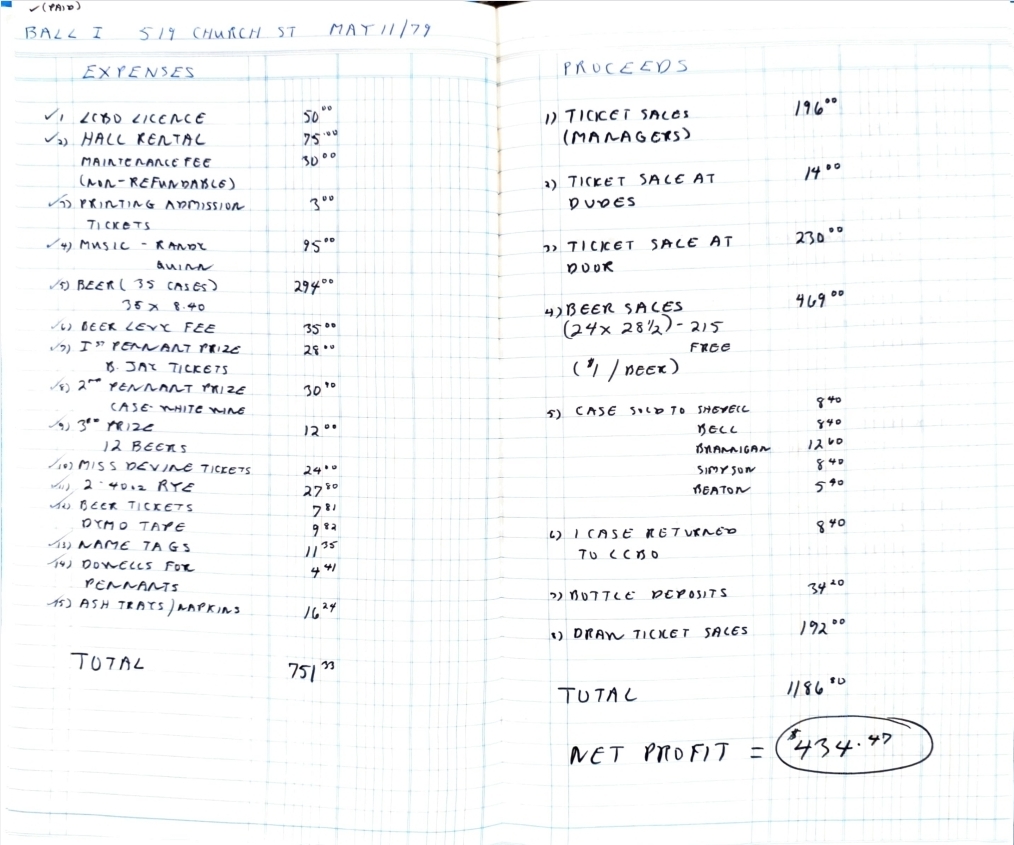
The constitution committee worked through the off season to establish a structure for the CGSL, Geoff da Silva drafted the initial documents and these were discussed during committee meetings held at Warren Shepell’s home. Elections for the new executive were delayed until February 1979 to allow the adoption of new election rules, Warren Shepell was elected commissioner. The first CGSL constitution was adopted by the membership at a meeting on April 1, the purpose of the league was:
“To provide and protect the opportunity for individuals, who support the bonds of gay fellowship, to play softball in an atmosphere of friendly competition, free of discrimination on the basis of age, race, creed, sex, ability and sexual orientation.”
Geoff da Silva was elected officiating chair. At an executive meeting on May 15, 1979 he passed a motion to create an award that would recognize a player each year who best contributed to the mission statement of the CGSL constitution. The award was to be called the Commissioner’s Cup and would be first awarded the following season. Jack Brannigan was elected social events chair, he worked in March and April to publish a calendar with a series of 8 social events through the season. A total of 12 teams played games each Saturday and Sunday from May through August, except long weekends. The executive organized a 2nd Canada Cup tournament. To promote the CGSL and the tournament, the executive approved a budget to hire league members David Wood, Kevin Smith, and Cathy Shepard to film the 1979 Canada Cup and create a video highlighting the city as a gay destination.
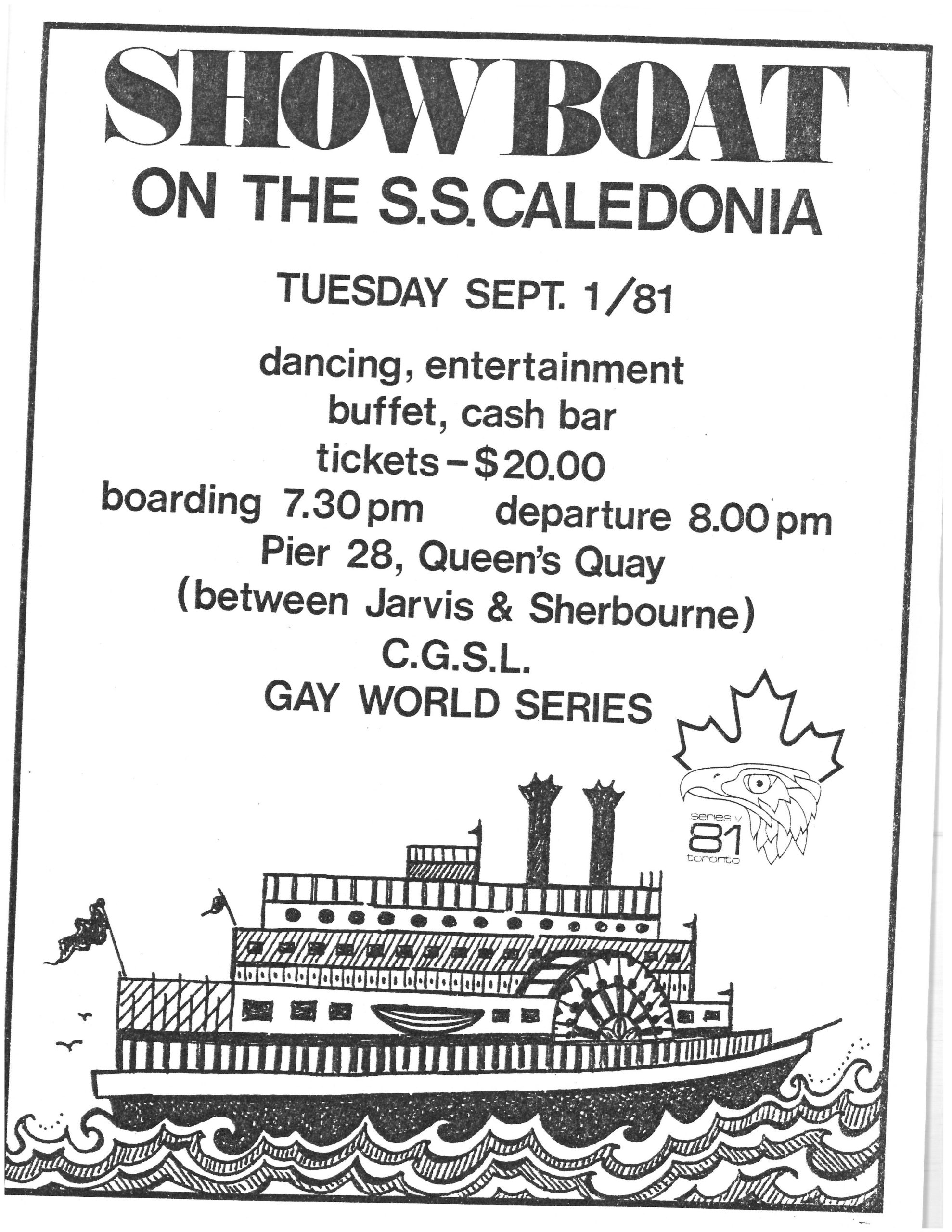
The executive continued to engage with leagues in the United States to create a gay softball organization, the North American Gay Alliance (NAGA) was formalized that summer with the CGSL as a founding member. The CGSL sent a team to play in the 3rd Gay Softball World Series held in Milwaukee. Although Los Angeles was to host the 1980 series, the alliance was accepting bids for Series V in 1981. The CGSL presented a bid at the NAGA meeting in Milwaukee on September 1, the alliance voted in favour leading to the creation of a CGSL Series V Committee. Warren Shepell was elected NAGA Commissioner.
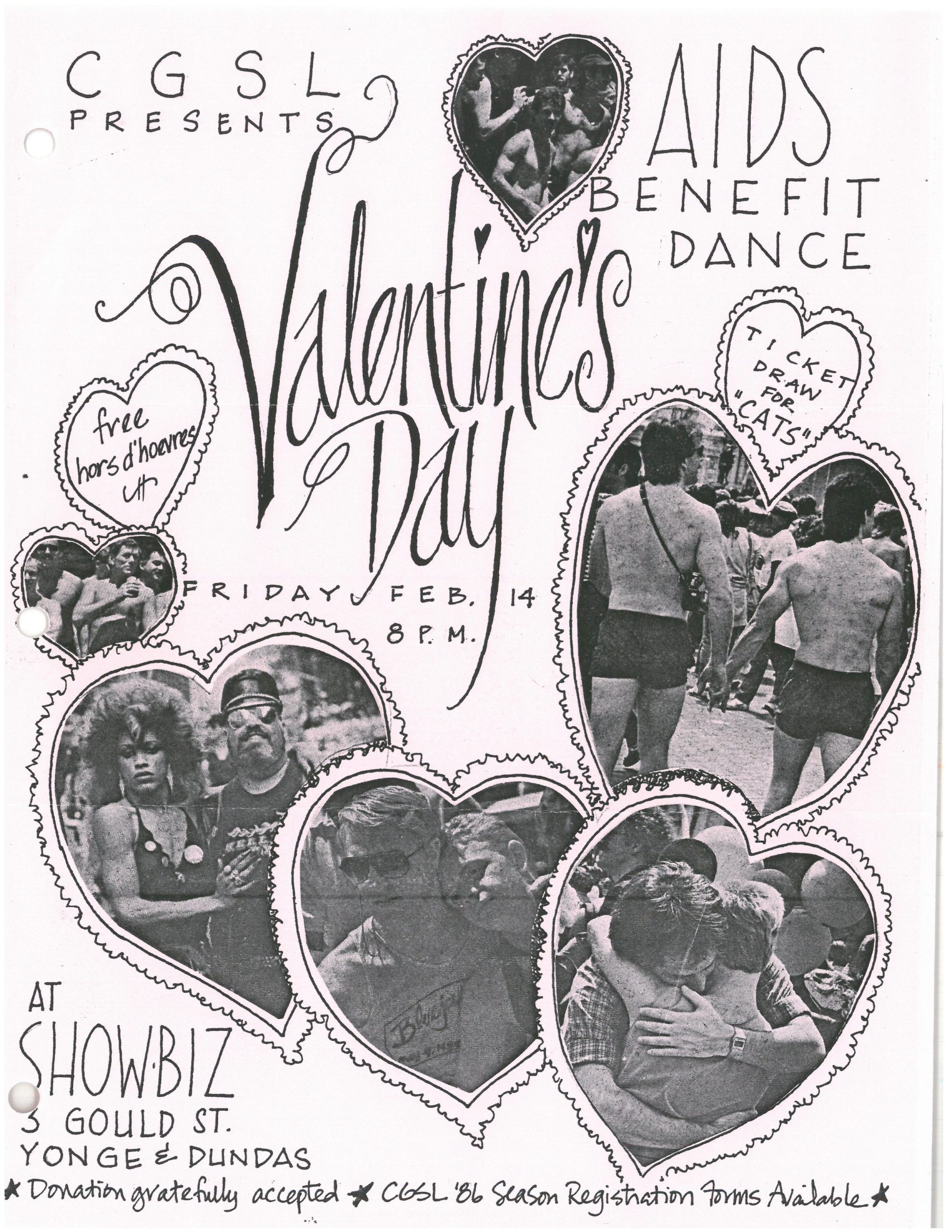
At the same meeting, NAGA adopted rules related to attending the Gay Softball World Series that were controversial for some members of the CGSL. One of these rules mandated that a league’s championship team must represent each league at the series, instead of each league sending an all-star team. CGSL had a practice of evenly dividing more skillful players across the teams, some players argued this practice meant CGSL teams could not be competitive at the world series under these rules. At an open forum on October 21, 1979, the new NAGA rules came up for a vote to the CGSL membership. When a majority of the league voted in favour of the new NAGA rules, a group of more competitive players led by Barry Borsellino walked out of the meeting in protest. They formed a new league called the Riverdale Softball League.
1980
Under Construction – More info coming soon
1981
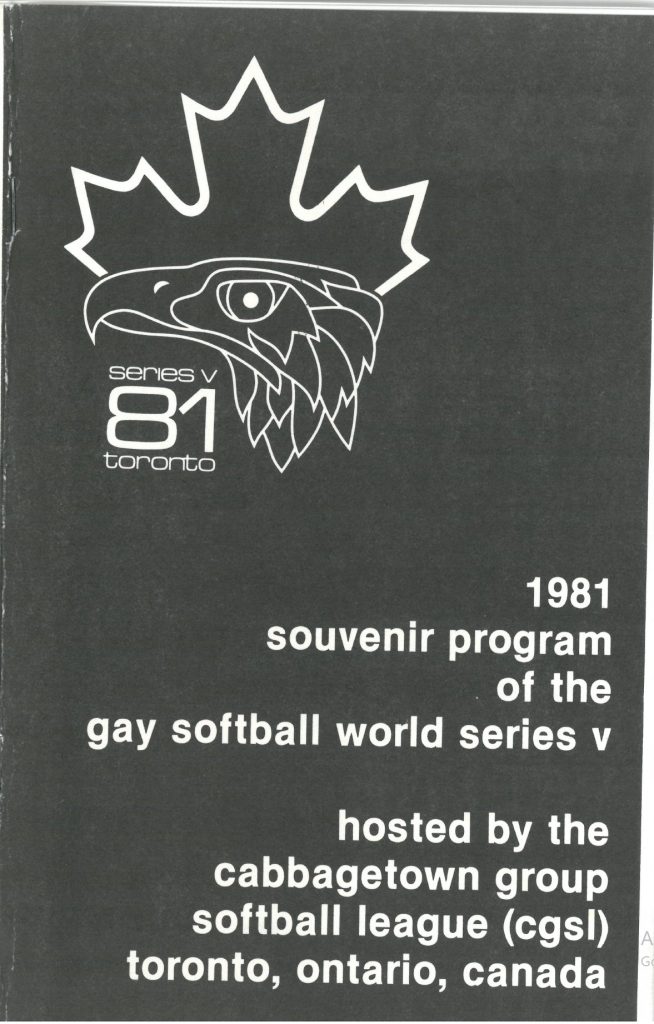
Under Construction – More info coming soon